
 Likes:
  Thanks:
  HaHa:
HaHa: 


First, waters in Minnesota, so-called navigatable ones anyway, which includes most of them are open to public use, although the shoreline may not be. They can be of any type although we have fewer of the big flowages found down south, and many more natural lakes. Most of the metro lakes are quite fertile, although not always heavily colored. Those with the real deep holes tend to be clearer as opposed to most of the smaller ones that can carry quite a bit more algae over mud bottoms. It varies quite a bit. As does the weed growth and type.Originally Posted by ekim22

Some communities have been given the right to access but the shoreline land owner may not, although they may deny permission to cross their property to get to it. Many of the lakes and ponds are inside municipal and public parks generally with either ramps or what is called carry-on. You may not want to get rid of your olive drab floater; with a trolling motor it would be the right scale for a lot of the waters. There are also horsepower restrictions on many of the public park lakes, for example Minneapolis Park lakes are limited to electric only and both parks and a lot of associated parking are off limits between 10 pm and 6 am, but they are not too large for your jon boat for the most part. Conversely Richfield does not allow any craft or swimming on their city lakes while Bloomington has at least one that is limited (IIRC) to 6 or 8 horses with a strict no wake and speed rule as well. Three counties park system covers quite a bit of the west and north Metro also. There are quite a number of public launch sites with varying hours and an additional number of pay to launch locations. Stickers are required for parking and on boats in some of the public park waters and they generally do not translate across the whole area.
Pike and walleyes are native to most of the waters in the entire state although in widely varying densities, largemouth bass also in the southern 2/3 and smallmouths heavily in the north and scattered around elsewhere, especially in the rivers. Crappies, yellow perch and sunfish (primarily bluegills, but also including greenies and pumpkinseeds and in some parts of the state - although not most of the Metro if not all of it - there are orangespots, too) are also found all over the state. Sunfish size can reach a good 10" plus in some waters, but mostly an 8" fish is considered big around here.
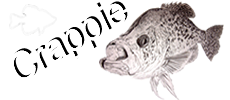
The crappies are mostly blacks, but some whites are found pretty much limited to scattered spots in the southern third of the state. Most Metro crappies caught are black, although not all of them. IMO pretty much any Metro water that does not regularly winterkill should have at least some. Some waters are real factories. Average size is 7-10", but on some scattered waters they can get much larger. You will have to find those for yourself.
Muskies are found far beyond their original range, since they have been stocked widely, although not so widely as the walleyes which are heavily stocked in a whole lot of places, being the state fish and all. Muskies have a very strong lobby in Minnesota resulting in their having been put at one time or another in far too many spots, mostly where they do not reproduce. That includes most of the possible Metro waters big enough to float one at some time or other over the past 30 years or so. There are a few scattered, surprisingly large muskies in many of the waters that have not been stocked for decades that show up once in a while. Not all of us are happy with how widely and indescriminately they have been moved around. Understatement! Happily they are not stocked everywhere, and the DNR has gotten pretty fussy over stocking additional waters.
If you are at all into river fishing there is also an impressive flathead fishery that has developed on the Minnesota River that runs through the southern part of the Metro and up the Mississippi and St Croix rivers at least to the northern edge of the Metro, too, and lots of channel cats in those rivers and stocked into some of the lakes.
There is also stream trout fishing just south and east of the Metro and particular lakes in and around the Metro get stocked with trout of some three species at least. Special regulations and licensing are required for taking them on the specially designated waters. You have to go well north of the Metro to find lake trout, but occasionally whitefish show up in some Metro waters.
Bait shops can be few and far between, convenient for some waters, not so much for a lot of others. Bait variety is generally limited to nightcrawlers, red worms, suckers, and two sizes of fatheads with possibly also wax worms. There are some shops with a much wider selection, such as Vados up north and a few others that offer shiners, redtail chubs and rainbows often depending on the season and the shop. I am told there is a pretty decent bait shop on Medicine Lake, but I have never been in it.
We do not have shad nor are they allowed to be kept alive up here, although a lot of channel catfishermen harvest them farther south, freeze them and then cut them up especially early in the season. There is also a strict limitation on which other species one can use for bait and strict rules about how one can collect it. Oh yes, leeches are a common and effective bait up here for all kinds of fish and come in a variety of sizes, generally available all over once we get to walleye opener, but the little ones can be dynamite on sunfish, too.
Not an issue for me, since I seldom, if ever, use live bait anymore, except for catfish in the river on those few times I fish for them. Then I pick up one of the big decoy suckers that show up after muskie season opens and cut it up for cut bait, or just collect some nightcrawlers from the back yard after a good soaking rain. I don't catch many channels, but the ones I do take average 2-4 pounds with regular reliable reports of some people taking them to well over 20. My biggest is 13#, but then I don't fish for them much either. 50# flatheads are also regularly taken, although most are smaller and very few bigger this far north. The DNR works pretty diligently to keep flatheads out of any waters where they are not naturally found; so you are not going to see them unless someone has snuck one in providing you are not fishing on of the rivers.
For specific waters go to the Minnesota DNR Lakefinder site which gives a pretty decent if general and often outdated rundown of many of the waters in the state. Our DNR is reeling under the same heavy budget cuts that are happening in a lot of states, or I expect there would be more updating, which is now pretty much limited to the most popular waters.
There is also a west Metro fishing guide that runs to at least 3/4 inch thick averaging more than one lake a page that expands on the DNR info a bit. There is an additional volume for the east Metro if you are interested. You can also get detailed topo maps on chips for GPS handheld units or as programs for your computer. Some of them show amazing detail. The topo maps from the DNR are much less dependable and many of them are decades old, but still better than nothing. Be careful that any commercial chip you get is specifically made for your GPS, they do not work in most other units.
Good fishing.

 Reply With Quote