Thanks:
0

HaHa:
0
-

One of the most prolific freshwater game fish, crappie can quickly overpopulate small waters. They may even affect bass and bream populations by eating the young of those species and compete with adults for the same dwindling food sources.
However, the state of Mississippi began producing sterile hybrid crappie that grow fast, but cannot overcrowd small ponds. They took black-striped crappie and crossed them with large white female crappie to produce triploid hybrid crappie.
Dubbed “magnolia crappie,” these fish could reach huge sizes in a few years, but won’t overcrowd small waters.
Like most fish species, crappie have two sets of chromosomes, which biologist call a diploid condition. These fish can reproduce naturally. However, the state came up with a way to create a third set of chromosomes, thus the triploid condition. Most triploid fish cannot reproduce naturally. The fish go through the motions of spawning and produce the necessary components, but the eggs cannot become fertilized.
“Beginning exactly five minutes after fertilization, we’ll put the eggs in a pressure chamber with about 7,200 pounds of pressure for two minutes,” Silkwood explains. “The pressure interrupts the normal cellular processes, resulting in the egg retaining an extra set of chromosomes. The fertilized egg and the offspring that develops from it have three sets of chromosomes and cannot reproduce.”
Black-striped crappie, a different color phase of a common black crappie, but with a narrow, dark stripe running from the dorsal fin down the top of its head to the nose, occur naturally in low numbers in some Mississippi lakes.
Sometimes, the dark stripe extends down the chin under the mouth. Also called a black-nose crappie, these fish reproduce naturally in Grenada Lake, where the brood stock for the magnolia crappie program originated.
Fishhound.com named Grenada Lake the best crappie lake in the United States since it routinely gives up fish exceeding three pounds. The state of Mississippi also stocked black-striped crappie into Enid Lake, ranked number 20 on the list of the top 50 crappie lakes.
However, the state does not stock magnolia crappie into large systems with naturally reproducing populations.
“Triploid crappie are strictly for the small park and public fishing lakes,” Silkwood says. “It’s a put-and-take fishery.”
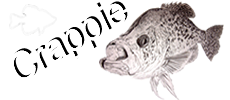
Magnolia crappie retain the black stripe on their noses like their male parents. Other than that, they look identical to any other crappie. They’ll even hang around brush piles, sunken logs, creek channel edges and other places where crappie gather. An angler may catch a “normal” crappie on one cast and a magnolia crappie on the next cast without knowing it.
“The average angler couldn’t really tell the difference in these fish and normal crappie without cutting them open and doing tests on them,” Silkwood explains. “Since these fish are sterile, they are not worried about reproducing. All they do is continue growing. They’ll get bigger, faster than normal crappie.”
In nature, crappie populations fluctuate wildly. A couple of good spawning years can boost the population. If the population grows too great, too many fish consume too much food. If food becomes scarce, the population may crash. After a population crash, food becomes more abundant, so spawning success increases and the cycle continues year after year.
Other factors can go into natural population fluctuations. Low water can concentrate too many crappie into too small a space, causing a population drop. A spring flood can help make an excellent spawning season by opening up much more bedding acreage to the fish.
Since magnolia crappie don’t breed, they don’t overpopulate small lakes. In the fall of 2012, the state of Mississippi stocked more than 200,000 of these triploid fish, each about four inches long, into many small public lakes. Some waters that received magnolia crappie include Lake Mike Conner, Lake Charlie Capps, Deer Creek, Holmes County State Park Lake, Lake Leroy Percy, Olive Branch Lake, Roosevelt State Park Lake, Lake Claude Bennett, Prentiss Walker Lake, Simpson County Lake and Lake Jeff Davis.
The state will monitor the crappie populations and growth rates in these waters stocked with triploid crappie to evaluate the program.
“Since these fish are sterile, people can put them in smaller ponds, as small as a half-acre,” explains Silkwood. “This will be an ongoing program where we grow these crappie every year. These sterile fish give anglers fishing these small waters more opportunities to catch different kinds of fish and bigger fish.”
The state does not sell these fish nor do state employees stock hybrids into private waters.
However, several commercial fish hatcheries raise these sterile fish. Individuals can buy magnolia crappie from private fish dealers for stocking in their own farm ponds and other private waters.
 Posting Permissions
- You may not post new threads
- You may not post replies
- You may not post attachments
- You may not edit your posts
-
Forum Rules
BACK TO TOP

 Likes:


 Reply With Quote